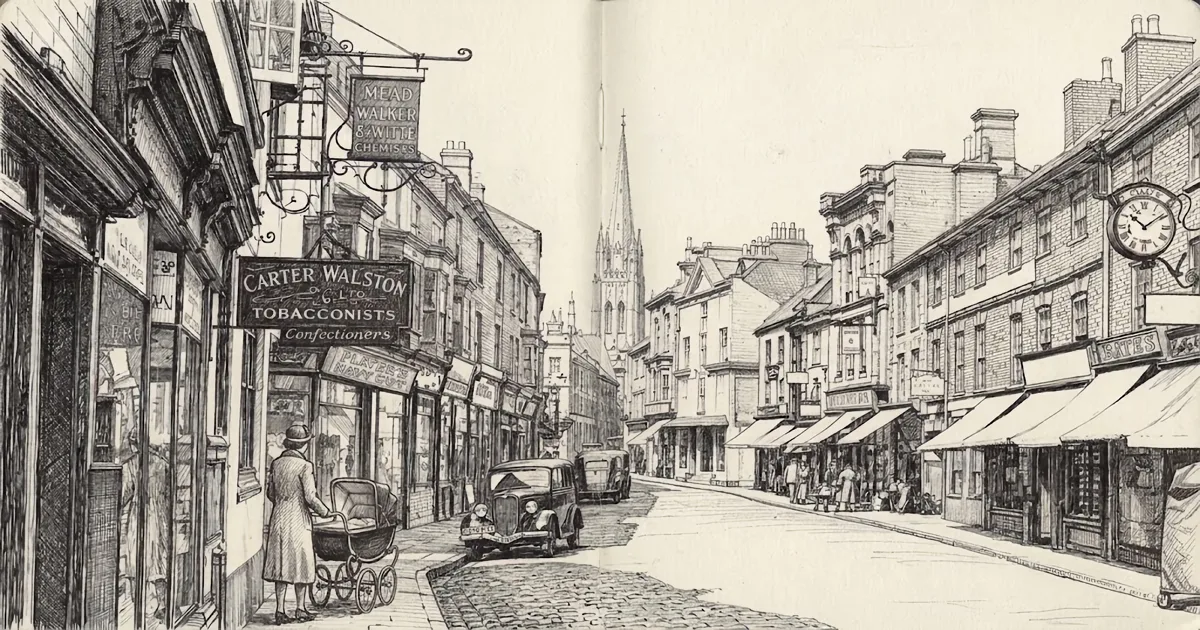
Louth's story starts long before there was a town here. Stone tools found a few miles away are around 400,000 years old. The town itself grew up in Anglo-Saxon times beside the River Lud, became a wealthy medieval market town under the Bishop of Lincoln, built one of the tallest parish church spires in England, and started a rebellion against Henry VIII. Later it became an inland port and a Victorian railway town, and lived through a devastating flood in 1920.
This part of inLouth tells that story period by period, so you can read as much or as little as you like.
Louth Through the Ages
- Before Louth: Ice Age to Romans How the Wolds and Hubbard's Hills were shaped, the first people in the area, and why Louth was never a Roman town.
- Anglo-Saxon and Viking Louth The settlement by the "loud" river, an important minster, Louth's own saint and the Viking influence on its street names.
- Medieval Louth Domesday Book, the Bishop of Lincoln's market town, Louth Park Abbey, the guilds and the Black Death.
- Tudor and Stuart Louth The spire, the end of the abbey, the grammar school, plague years and the Civil War.
- The Lincolnshire Rising, 1536 The rebellion against Henry VIII that began in St James' Church.
- Georgian Louth and the Canal The Louth Navigation, Riverhead's warehouses and maltings, and the Georgian town.
- Victorian Louth Tennyson's first book, the railway, the Town Hall, the workhouse and a growing market town.
- The Louth Flood, 1920 The afternoon the Lud swept through the town and 23 people died.
- Louth Since 1900 Hubbard's Hills, two world wars, losing the canal and railway, and the town today.
Key Dates
- About 400,000 years ago: people make flint handaxes at Welton le Wold, three miles west of Louth
- 5th century: Anglo-Saxon settlers arrive in the area
- 1086: Domesday Book records 124 households and 13 mills at Louth
- 1139: Louth Park Abbey is founded
- 1501 to 1515: the spire of St James' Church is built
- 1 October 1536: the Lincolnshire Rising begins in Louth
- 1551: Edward VI grants the grammar school its charter
- 20 May 1770: the Louth Navigation canal opens
- 1848: the railway reaches Louth
- 1907: Hubbard's Hills opens as a public park
- 29 May 1920: the Louth flood
- 1924: the canal is abandoned
- 5 October 1970: the last regular passenger trains
- 1991: the A16 bypass opens
Where to See Louth's History Today
- Louth Museum on Broadbank, run by the Louth Naturalists', Antiquarian and Literary Society, has Anglo-Saxon finds, the famous panorama of Louth painted from sketches made on the spire, and much more. See louthmuseum.org.uk.
- St James' Church, whose spire has dominated the town for more than 500 years.
- Hubbard's Hills, the steep-sided valley shaped by glacial meltwater and opened as a park in 1907.
- Louth Park Abbey, east of the town, where earthworks and fragments of the abbey church survive.
- Riverhead, where the canal ended and the old warehouses still stand. The Louth Navigation Trust looks after its story.
- Louth Town Hall on Eastgate, built in 1854.
Find Out More
Louth is well served by local historians. Good places to start are Louth Museum and its blog, Louth Town Council's history of the town, and the Lincolnshire Heritage Explorer, which records archaeological sites and historic buildings across the county.
Spotted something we've got wrong, or know a story that belongs here? Please get in touch.