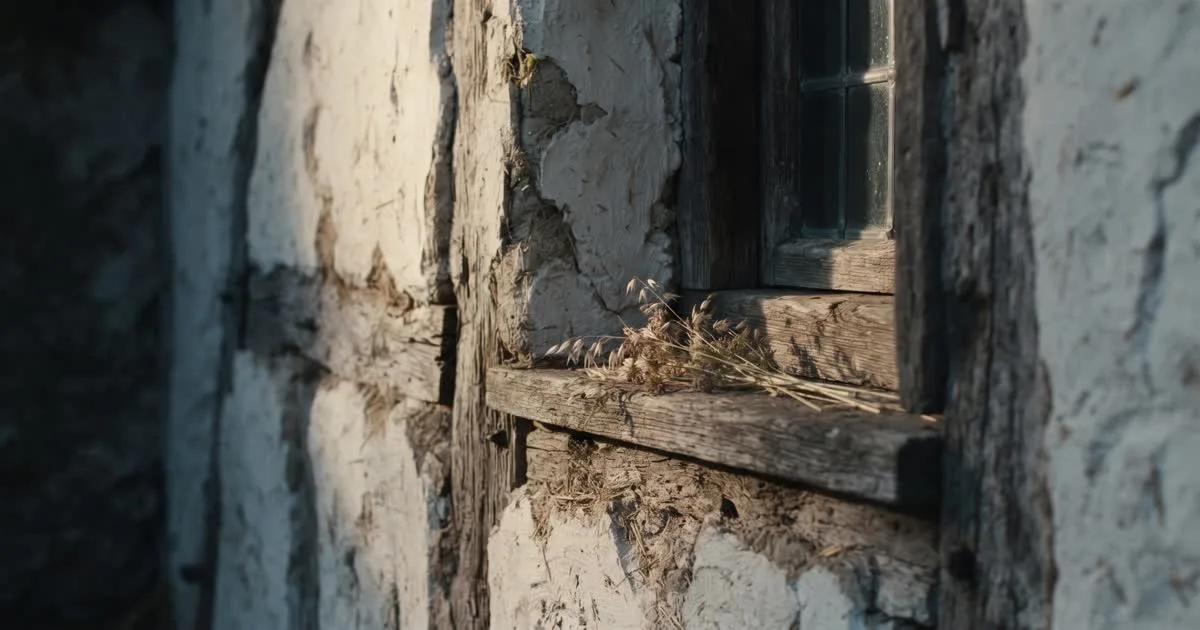
Lincolnshire County Council is asking the public to help record the county's surviving mud and stud buildings: traditional homes built from timber, straw and soil. The survey runs through 2026 and 2027, and anyone who knows of a building they think is, or was, mud and stud can report it online.
If you have walked through a Wolds village and noticed a low, thick-walled cottage with a slightly uneven look, it may be one of these. Mud and stud is a way of building that belonged to ordinary people, and it is closely tied to Lincolnshire. The council's new project wants to find out how many are left.
What Is Mud and Stud?
Lincolnshire County Council's heritage service describes mud and stud as the county's answer to building houses from whatever was close to hand. People took trees from the hedgerows, straw from the fields (or reed from the fens) and soil from their own gardens, and made compact houses that met their needs. The method was used from the 16th century to the late 1800s.
The council says that many people living in mud and stud homes today report that they are warm in winter and cool in summer. The buildings have stood for at least 150 years, so most have been altered many times by the people who lived in them. That makes them look very different from one another, and some are hidden behind later brickwork.
The Survey
The Mud and Stud Buildings Project is run by Lincolnshire County Council, with funding from Historic England. The first phase runs through 2026 and 2027. It is a county-wide survey, including North and North-East Lincolnshire, that aims to identify every surviving mud and stud building and to gather as much information as possible about those that have been lost.
Once the information has been collected, it will go into the Lincolnshire Historic Environment Record and be available to the public online. The council also plans to improve how mud and stud is identified in existing records. In later phases it hopes to record individual buildings in detail and to date them scientifically, because at the moment nobody knows how old any of them really are. It then hopes to produce advice for owners on caring for their buildings, and to look at whether mud and stud could be a low-carbon way to build in future.
How to Help
The project asks people to look out for buildings that might be mud and stud, and to tell the team about them. There are three ways to take part.
You can fill in the project's online building recording form, which is linked from its How can I get involved? page. You can email the team on mudandstud@lincolnshire.gov.uk. And if you are thinking of renovating an old house, the project suggests that your district's conservation officer can help you work out how best to do it, and says the team would also like to help.
The project's website says a "Spotters' Guide" is coming soon, to help people recognise mud and stud buildings. It is worth checking back for it.
Seeing One for Yourself
Two places to see mud and stud are Withern Cottage in The Village at Church Farm Museum in Skegness, and the King's Head pub in Horncastle, which Lincolnshire's heritage records describe as a mud and stud building with a thatched roof. The project's own website lists a few more places to visit, including pubs and cafés. Check opening times with each place before you travel.
Louth and the Wider Story
Mud and stud belongs to the same period that shaped the town centre. Our history pages cover Tudor and Stuart Louth, Georgian Louth and the Canal and Victorian Louth, and the whole story is on A History of Louth.
If you enjoy looking at old buildings as you walk, our guide to walks in and around Louth takes you into the Wolds, where the old cottages are. We have not found a named mud and stud building in Louth itself, so the survey may well turn up new ones.
Details on this page come from the Mud and Stud Buildings Project's own website and were checked on 25th November 2026.