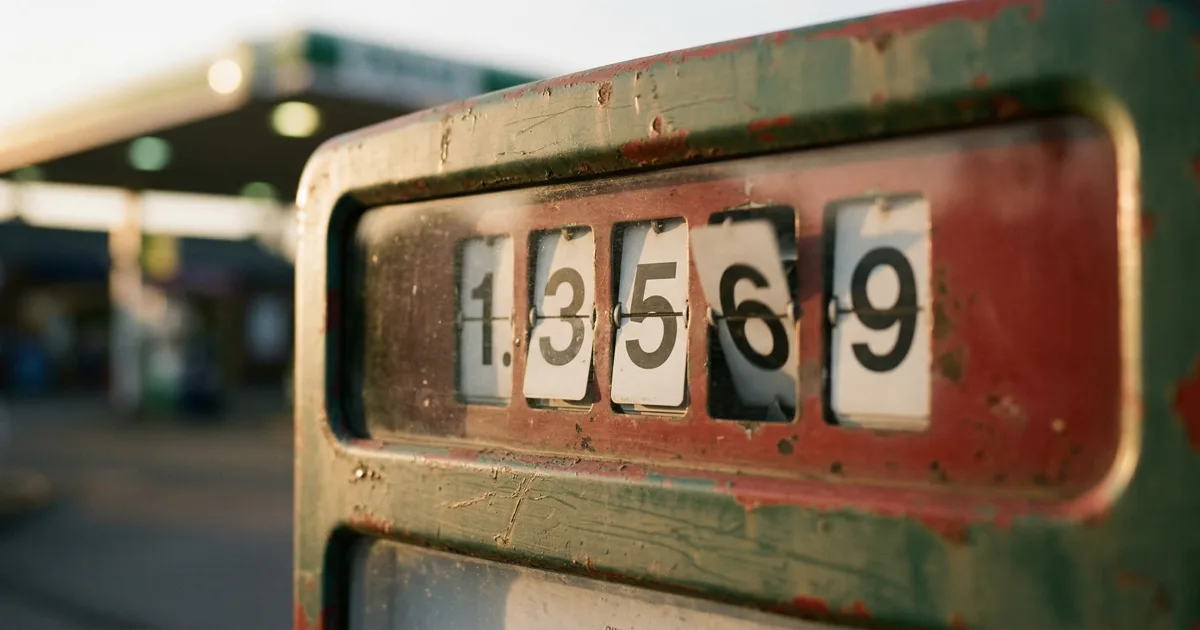
You've probably done it. Checked a fuel price app, driven to the station, and found the price on the pump is slightly different to what you saw on your screen. A penny up, a penny down, sometimes more. It's not the app lying to you, and it's not the garage playing games.
There's actually a perfectly straightforward explanation.
All the comparison sites use the same source
Since the government's Fuel Finder scheme came into force, petrol stations are legally required to report their prices to a central database. CheckFuelPrices, along with every other major comparison tool, pulls from that same official feed. So when you see a price on any of these sites, it's coming from government data, not something the website has made up.
Check prices in Louth:
https://checkfuelprices.co.uk/fuel-prices/LN11-louth
But there's a time lag built into the system
Here's where it gets a bit more real-world. When a Louth forecourt changes its pump price, it has up to 30 minutes to update the central Fuel Finder database. The government's system then pushes that out to the API that comparison sites use, which takes a few minutes more. Then the comparison site itself might only refresh its data every 5, 10 or 15 minutes depending on how it's set up.
Add all that together and you can easily have a 30 to 60 minute window where the pump price has changed but every website is still showing the old one. By the time someone's taken a screenshot and posted it in a local Facebook group, chances are the prices have shifted again anyway.
Not every station is fully up to speed yet
Fuel Finder only recently became mandatory, and there's still a settling-in period. Early reports suggested around one in four stations weren't fully on the system or weren't updating correctly at launch.
A local fuel station can be technically registered on the scheme but still occasionally send late or incorrect data, and that flows straight through to every comparison site using the feed.
Human error plays a part too
Someone at the forecourt keys in 149.9 instead of 159.9. Or they update the sign but forget to push the change through to the system. It happens. The data is only ever as good as the person entering it.
The pump price is always the one that counts
The government is clear on this. There will sometimes be a delay or error between what's at the pump and what third-party sites display, and drivers should always trust the forecourt price. If you spot a significant mismatch that doesn't seem like a simple lag issue, you can report it directly to the forecourt, or flag it via the official Fuel Finder reporting form.
The prices we publish on inLouth are based on the same official Fuel Finder data used by CheckFuelPrices and other major tools. We update daily, but we'd always say the same thing, check the pump before you fill up.
The Fuel Price Gap, Explained
Why does the price on a fuel app differ from the price at the pump?
The gap exists because of a built-in time lag across the data chain between the forecourt and the comparison site. Stations have up to 30 minutes to report a price change to the central Fuel Finder database, and comparison sites may only refresh their data feed every 5 to 15 minutes on top of that. In practice, this means a real-world window of up to an hour where the pump price and the online price are out of step.
What is the Fuel Finder scheme and who runs it?
Fuel Finder is the UK government's mandatory open data scheme that requires petrol stations to report live fuel prices to a central database. It is managed under the Department for Energy Security and Net Zero, and the data is made publicly available via an API that price comparison websites and apps use as their source. The scheme became mandatory for all forecourts in 2024, replacing the previous voluntary reporting system.
Are all fuel price comparison websites using the same data?
Yes, all major UK fuel price comparison tools draw from the same official Fuel Finder government data feed. This means that when prices differ between sites, the cause is almost always a difference in how frequently each site refreshes its copy of the feed, not a difference in the underlying source. The data itself originates from the forecourt, flows through the government API, and is then picked up by comparison platforms.
Can a petrol station show the wrong price on a comparison site?
Yes, and it happens more often than most people realise. A staff member can enter an incorrect price when updating the system, or forget to push through an update after changing the forecourt sign. There can also be technical mapping errors where a comparison site has matched the wrong station ID or fuel grade to a listing, meaning the price shown is not actually from that forecourt.
Which price should I trust, the app or the pump?
The pump price is always the definitive price, and government guidance is clear on this point. Online prices, including those from official comparison tools, are indicative and subject to the reporting delays described above. If there is a significant and unexplained difference between what a site shows and what the forecourt is charging, it should be reported directly to the station or via the Fuel Finder error reporting process.
How quickly must a petrol station update its price after a change?
Under the Fuel Finder scheme, forecourts are required to update the central database within 30 minutes of a pump price change. This is a legal obligation for all registered stations, though compliance during the early rollout period was not universal. Independent audits at launch suggested a notable proportion of stations were either not yet fully integrated or were not updating within the required window consistently.
Why do some towns show cheaper fuel than others on price comparison sites?
Fuel prices vary between towns due to a combination of local competition, proximity to fuel distribution depots, and individual retailer pricing decisions. Comparison sites typically define a "town" using a postcode area or a radius from a central point, which can pull in out-of-town supermarket forecourts or bypass stations that may not feel local to residents. This geographic definition sometimes creates confusion when a listed "cheapest" station is technically within the search area but not where locals would naturally look.