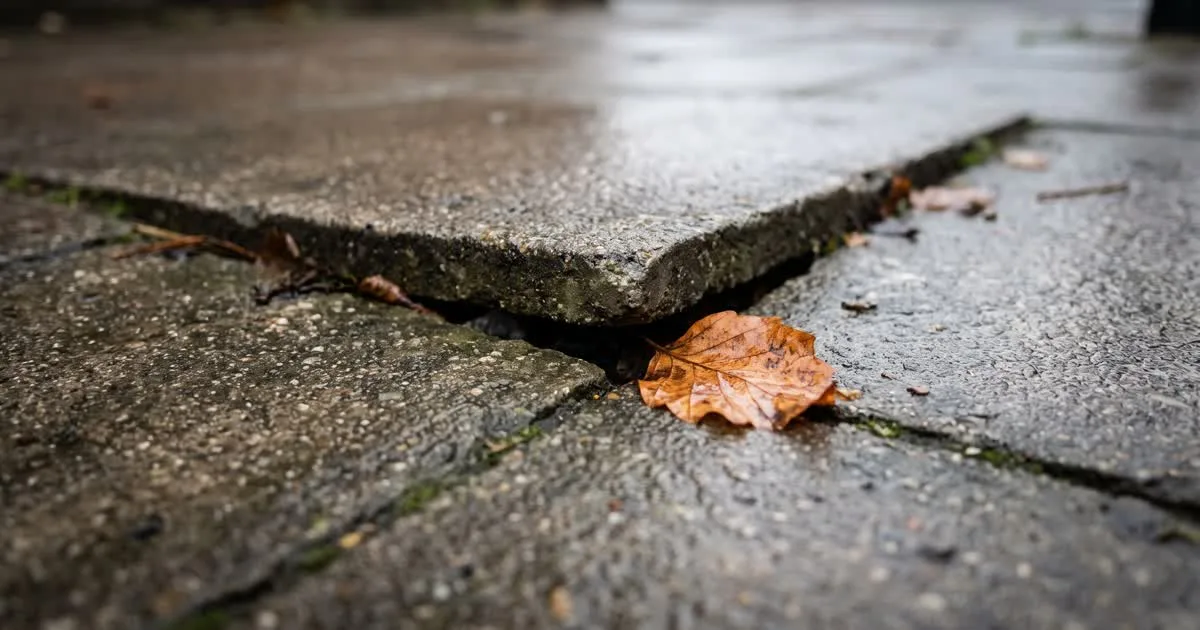
Spotted a pothole, a loose paving slab or a street light that has gone out? The first question is always the same: whose job is it to fix? In and around Louth the answer is usually Lincolnshire County Council for roads and pavements, and East Lindsey District Council for rubbish, litter and dog mess. Both have online forms, and a report takes a few minutes.
If someone is in danger right now
Call 999 if anyone is hurt or in immediate danger. For a hazard that could injure someone but is not an emergency, report it online straight away. Lincolnshire County Council says that if a fault is an immediate danger outside normal working hours, you should call the police on 101.
Roads, Pavements and Potholes
Lincolnshire County Council looks after the roads and, in its own words, "pavements that run alongside roads and some link footpaths". That covers town centre paving, the pavement outside the shops and most of the paths you walk on every day. It has a separate online form for each kind of fault:
- Report a pavement problem for uneven or broken slabs, trip hazards, sunken or raised covers
- Report a pothole or road edge problem for holes in the road
- Report a road or cycleway problem for other damage to the road surface
- Report a roadworks problem for works left unsafe or badly signed
The council says it usually repairs potholes deeper than 40mm in a road and deeper than 25mm in a pavement, and that it makes trips and potholes over 25mm in a pavement safe within 24 hours, either by signing and guarding the spot or with a temporary repair. It also says it weighs up the depth and size of a hole alongside where it is and how fast and busy the traffic is. A smaller fault can still be worth reporting, because the council inspects roads regularly but faults develop between inspections.
Not every road in the area is the county council's. The A16, for example, is Lincolnshire County Council's responsibility, and private roads and roads on private land are usually the landowner's.
Street Lights, Drains, Signs and Trees
These also go to Lincolnshire County Council, each with its own form:
- Street or subway light problem
- Flooding or drainage problem, including a blocked road drain
- Sign or bollard problem
- Traffic signal problem
- Hedge or tree problem, such as branches over a pavement or blocking a sign
- Highway obstruction problem
- Grit bin problem
The full list of faults is on the council's report a fault page.
Fly-Tipping, Litter and Dog Mess
East Lindsey District Council deals with street cleaning and rubbish. Its Report page lists forms for street cleaning, abandoned vehicles, dog fouling, graffiti and littering, and there is a separate fly-tipping form. You can also ring the council on 01507 601111.
Fly-tipping on council land or a public road is the council's to clear. On private land it is the landowner's problem, and the council says it will not clear it. If you are tidying up your own rubbish, the Louth Recycling Centre and the bin guide will help you get rid of it properly.
Please do not touch or move fly-tipped waste yourself. It can contain sharp objects, chemicals or asbestos. Take a photo from a safe distance and report it.
Water Leaks
Water running down a pavement or road from a burst pipe is Anglian Water's job, not the council's. Anglian Water has an online map for reporting a leak and a free 24 hour leakline on 0800 771 881. Check first whether it already knows about it.
Parks, Benches and Hubbard's Hills
Louth Town Council manages Hubbard's Hills and looks after the benches and other things it owns. For a broken bench, a damaged sign or a hazard in the Hills, contact the Town Council office at The Sessions House, Eastgate (01507 355895). The office is open 10am to 1pm, Monday to Friday. If a path next to the road is the problem, it is usually the county council's job.
Private Land
Some of the paths people use every day are not public highway. A shop forecourt, a car park, a private yard or the grounds of a business are looked after by whoever owns them. A council cannot fix those, so the best route is to tell the shop, landlord or managing agent, ideally in writing with a photo. If you are not sure who owns the spot, ask the nearest shop or business, as their staff usually know.
What to Put in a Report
A clear report gets looked at sooner and sent to the right team. Try to include:
- The exact place. The online forms use a map, so drop the pin on the spot itself. Add a landmark, such as "outside the chemist on the corner".
- A photo with something in it to show the size, such as a coin or a shoe.
- What the hazard is. Say "paving slab sticking up about 3cm", not "bad path".
- Who it affects. A busy crossing, a school route or a path used by wheelchairs and pushchairs matters.
- Whether anyone has been hurt.
Report the problem to the right body once, with the details above. Several people reporting the same fault is fine, though the county council form lets you add to an existing report so it is not counted twice.
After You Have Reported It
Lincolnshire County Council has a Check fault progress page where you can follow a report. If nothing happens and the hazard is getting worse, report it again with a fresh photo.
If you have been injured or your vehicle has been damaged because of a road or pavement fault, the council has a highways claim page. It explains that a council may be liable only if it was negligent, so a fault on its own does not mean a claim will succeed. It is worth reading before you apply. For anything involving a serious injury, you may want to get independent advice.
Details checked 2nd November 2026.